Your NW Honey Guy
Orange Blossom
Orange Blossom
Couldn't load pickup availability
The History of Orange Blossom Honey
Until the 1930s, California produced approximately 70% of the oranges in the United States. The introduction of oranges to California dates back to the late 18th century, when Spanish missionaries planted orange groves along their missions. These early plantings laid the groundwork for what would become a thriving citrus industry.
The Role of Pollinators
Although orange blossoms are self-fertile and do not require bees for pollination and fruit set, honeybee activity has been shown to significantly increase fruit production. Pollinators like bees and butterflies are attracted to the nectar and pollen of orange tree flowers and facilitate the transfer of pollen grains between flowers. Oranges depend on honey bees for pollination by as much as 90%.
Characteristics of Orange Blossom Honey
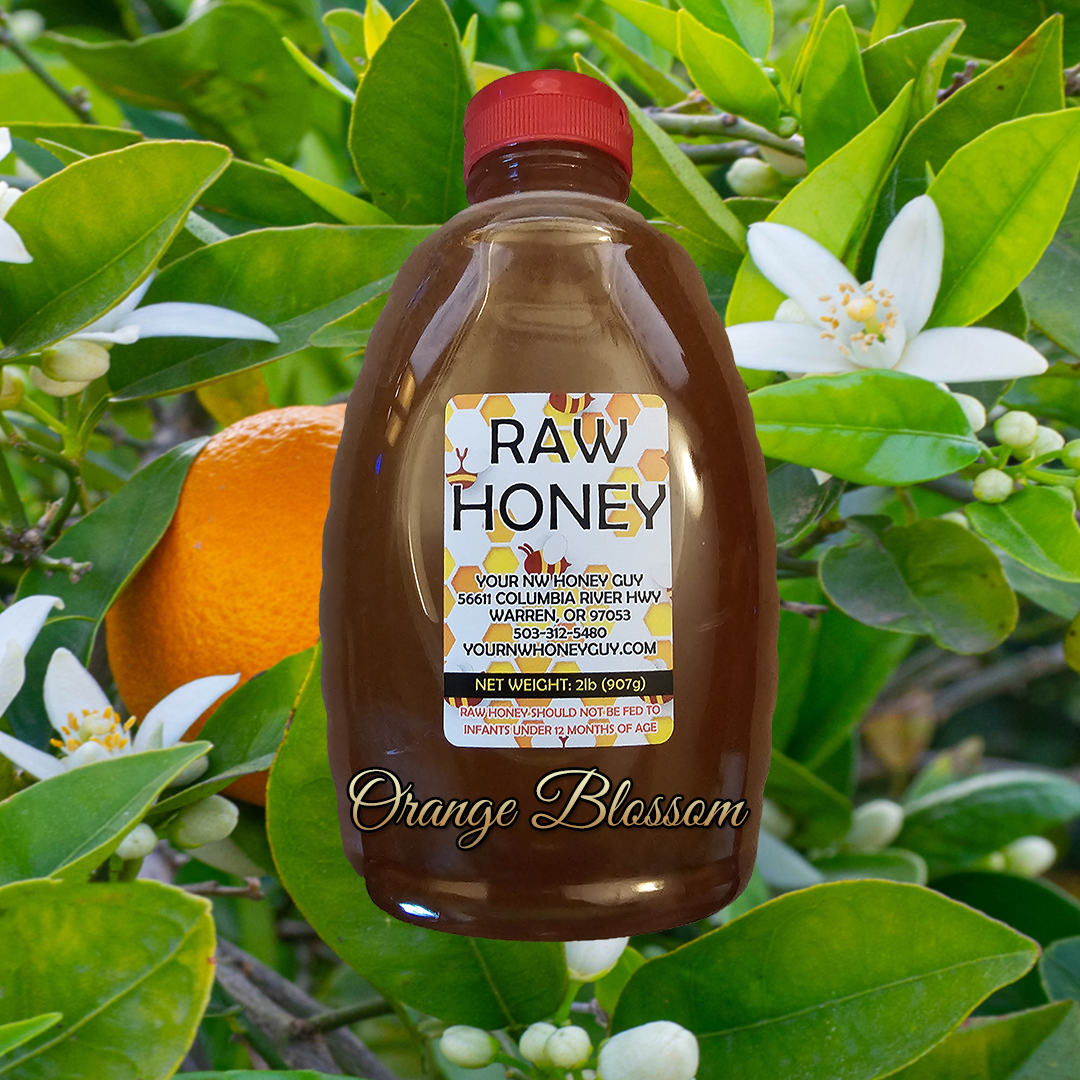
Orange blossom honey is made primarily from the nectar of orange blossoms, giving it a unique flavor and aroma reminiscent of sunlit groves. This honey features a light floral citrus taste and a light amber-gold color. Its distinctive qualities often impress those who try it, with its taste, texture, and color standing out.
Raw and unfiltered orange blossom honey, such as ours, retains more beneficial enzymes and phenolic compounds compared to heavily processed commercial varieties. If the label reads "ultra-filtered," most of the pollen and some bioactive compounds have been removed.
Nutritional Benefits
Orange blossom honey provides the same well-known benefits as other high-quality honeys, while also offering some unique advantages tied to its citrus origin. It contains antioxidant compounds specific to citrus nectar, serves as an effective cough suppressant, and offers small amounts of minerals.
Its identity is defined by hesperetin, a flavonoid found exclusively in citrus honey. Researchers use hesperetin as a marker to confirm that honey is derived from citrus flowers, with concentrations ranging from 0.07 to 0.76 mg per 100 grams. Orange blossom honey also includes naringenin, caffeic acid, luteolin, and other phenolic compounds, contributing to a total antioxidant profile of roughly 3.64 mg per 100 grams.
Compared to white sugar, orange blossom honey delivers antioxidants, trace minerals, and bioactive enzymes. Using it as a sweetener—for example, adding a tablespoon to tea or yogurt—offers a genuine upgrade over refined sugar.
Culinary Uses
Orange blossom honey is versatile in the kitchen. It makes an excellent topping for yogurt, oatmeal, or ice cream, adding warmth and sweetness. Drizzling it over roasted fruits like pineapple or peaches creates a delicious sweet and savory glaze. Its unique flavor profile opens up endless possibilities for cooking and baking.
When baking, orange blossom honey pairs especially well with citrus-based desserts such as lemon bars, orange creamsicle cheesecake, and key lime pie.
Share